
"Last Known Position" Is the Most Dangerous Status on Your Map
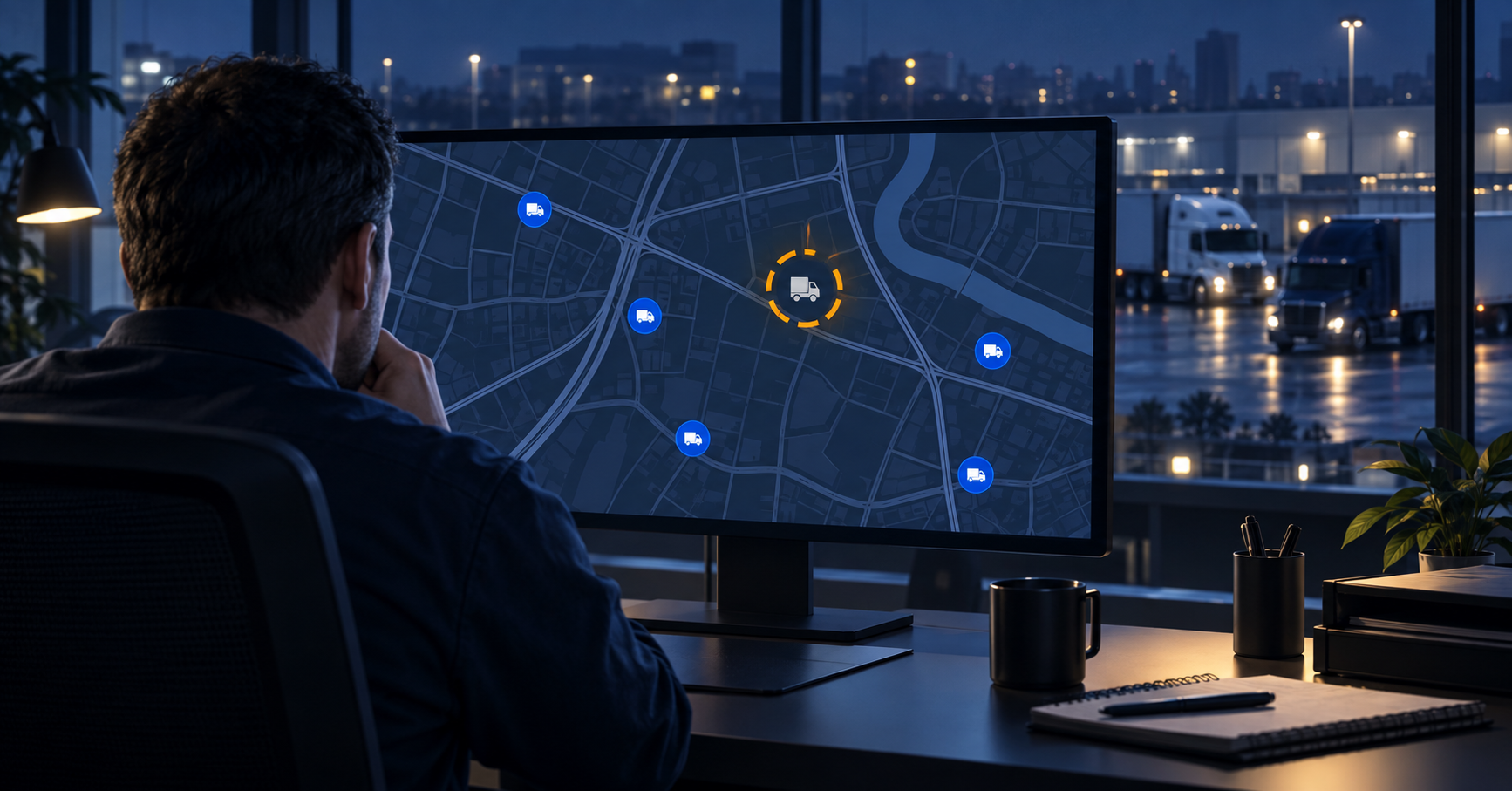
Every fleet map has a status nobody looks at twice: the marker that stopped updating. It sits where the vehicle was last seen, the timestamp quietly ages, and the platform shows nothing dramatic because, technically, nothing has happened. That is the problem. A stale position looks exactly like a parked vehicle, and a thief who cuts the signal is counting on the dispatcher reading it that way.
Three ways a marker goes stale
The first is innocent: an underground garage, a metal warehouse, a tunnel. The second is a jammer, a device that floods the GPS and cellular bands so the tracker cannot fix a position or report one. The third is spoofing, which is worse because the marker doesn't go stale at all: a fake signal feeds the tracker a plausible position, and the map shows a vehicle sitting calmly in a yard it left an hour ago. From the dispatcher's chair, the innocent case and the two attacks look the same until you decide they shouldn't.
The policy that makes silence loud
The fix is not a better map; it is a rule that turns absence of data into an event. In MotoMon GPS you set three things per vehicle or asset group. A signal-loss alert: if a unit has not reported for longer than a defined window outside its known blackout locations, notify someone. A jamming alert: SmartBox 2 recognizes the signature of a jammer directly in the GNSS receiver and reports the attempt itself, which is a fundamentally different event from a normal gap. And a spoofing alert: the same receiver compares signals across GPS, Galileo, GLONASS and BeiDou and flags a position that only one "constellation" seems to agree with.
Who gets the alert, and what they do
An alert nobody owns is a log entry. Define the recipient by time of day, not by job title: the person who holds the phone at 2 AM on a Saturday must be first on the list. Then write the response in three lines. Open the map and check the last verified position and the time. Call the driver or the site. If neither answers within a few minutes, call the police with the last verified position and the direction of travel. Three lines, agreed in advance, save the twenty minutes during which a stolen vehicle is still on the same road.
Whitelist the innocent cases
Alerts that fire in every underground garage get switched off within a week. Mark the locations where your vehicles legitimately lose signal as geofences with the signal-loss alert suppressed, and let the rule fire everywhere else. A vehicle that goes quiet in your own depot is normal. A vehicle that goes quiet on the highway at night is not.
Why the receiver matters more than the software
Software can only react to what the tracker reports. A basic single-band unit reports nothing during a jamming attack and reports a wrong position during spoofing, so no alert rule can save it. A multi-constellation receiver with jamming and spoofing detection reports the attack as an attack. That is the difference between a platform that shows you a parked truck and one that shows you a theft in progress. For assets that stand outdoors for months, the same detection runs in the battery-powered SmartBox 2 Lite.
If your map can't tell the difference between "parked" and "silenced," your alert rules have to.
To set up signal-loss, jamming and spoofing alerts for your own vehicle groups, book a live demo.
How long can a marker stay silent before anyone notices?

