
Geofencing monitors vehicles, machinery, and people
Virtual fences in GPS systems
Digital technology is increasingly becoming an integral part of daily business operations. One of the less obvious but highly useful features is geofencing – a virtual fence that monitors whether a vehicle, machine, or other asset is moving where it should be. This might sound simple, but when you look closer, you'll find this principle has enormous applications across industries: from agriculture and logistics to municipal services and field operations.
Construction and agriculture
Controlling heavy equipment and field work
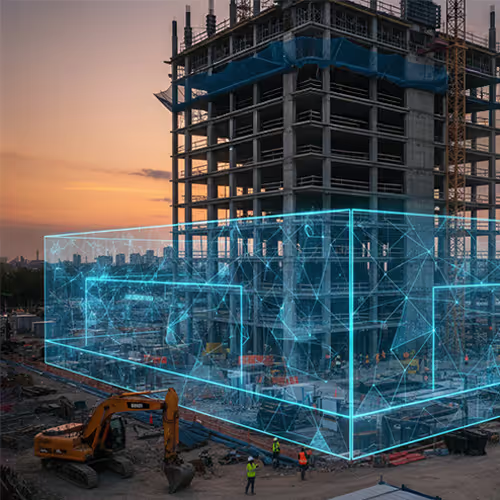
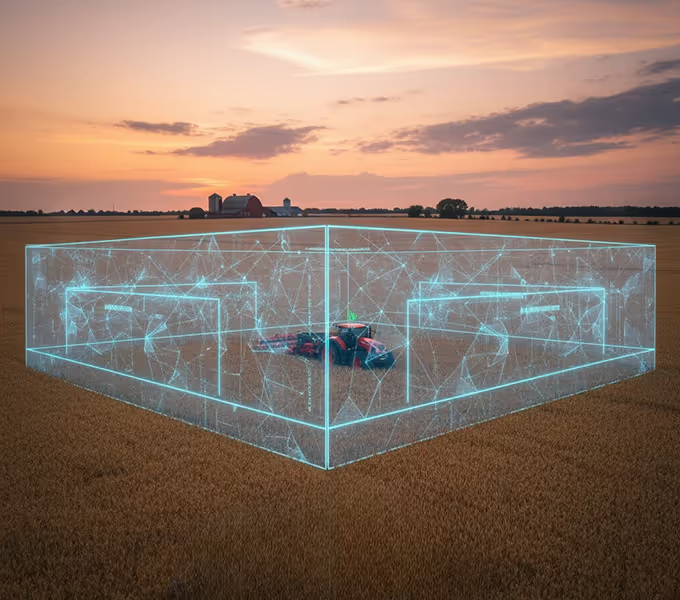
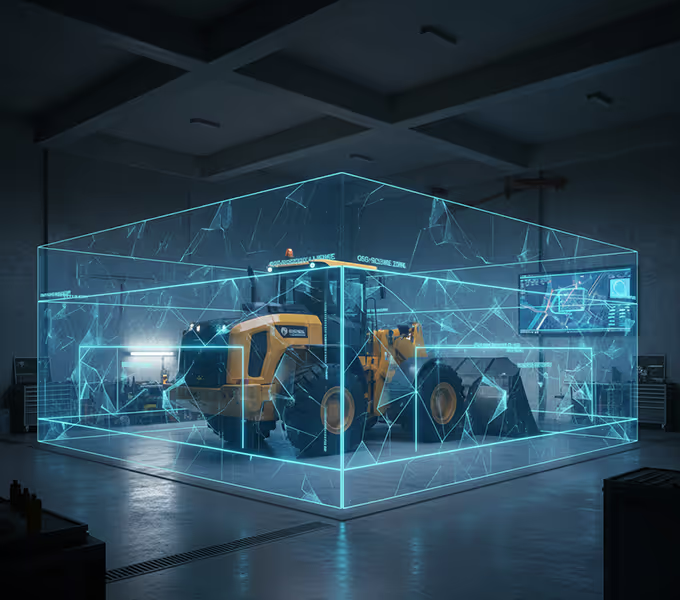
Construction sites and fields are home to machinery worth significant investment. Loss or unauthorized movement of an excavator, crane, or tractor can result in substantial financial losses. Geofencing serves a dual role in these environments: it functions as asset protection by alerting you when equipment leaves a designated area, and simultaneously as a tool for work documentation.
Zones enable precise tracking of how many hours specific machinery spent on a construction site or in a field. This is valuable not only for internal efficiency monitoring but also for client billing. No more disputes about whether the excavator was on the job for five or eight hours. GPS system data provides clear evidence.
Logistics
Ensuring cargo arrives where it should
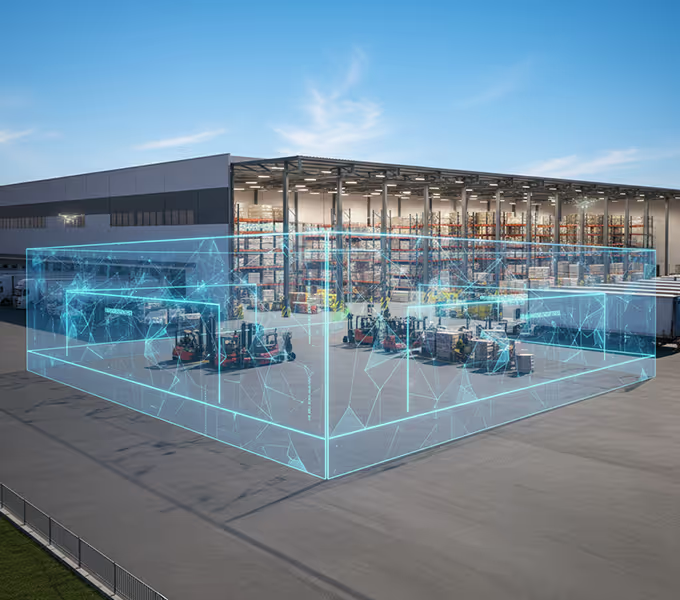
Cargo delivery is often complicated. Drivers wait in queues at warehouses, customers complain about late deliveries, and dispatchers don't always have a clear view of where their vehicles are. Geofencing functions as a reliable automatic recorder of arrivals and departures.
When a truck enters a warehouse's designated zone, the system immediately logs it. The same happens upon departure. This eliminates disputes and enables precise evaluation of loading and unloading duration. Customers receive proof that goods were actually delivered on time, and logistics companies gain data to optimize their processes.
Sales representatives and service technicians
Tracking client visits
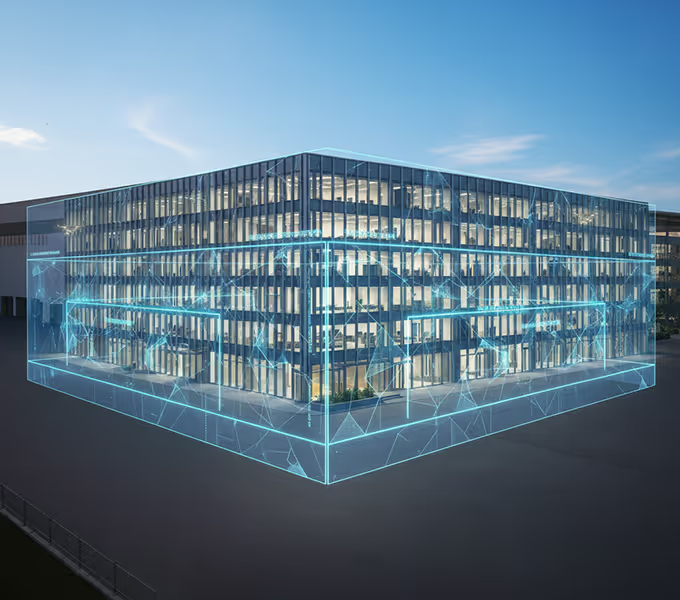
Companies with dozens of people in the field often struggle with efficiently documenting client visits. Geofencing provides an elegant solution: instead of displaying an anonymous address in the logbook, the system shows a specific named location – for example, "Client Novak LLC."
This makes it easy to review how many times a representative visited a customer and how long they stayed. For sales directors, this is an invaluable source of information about team activity; for service companies, it's clear proof that a technician actually arrived at the service location.
Municipal services
Cleaning, waste collection, and winter maintenance
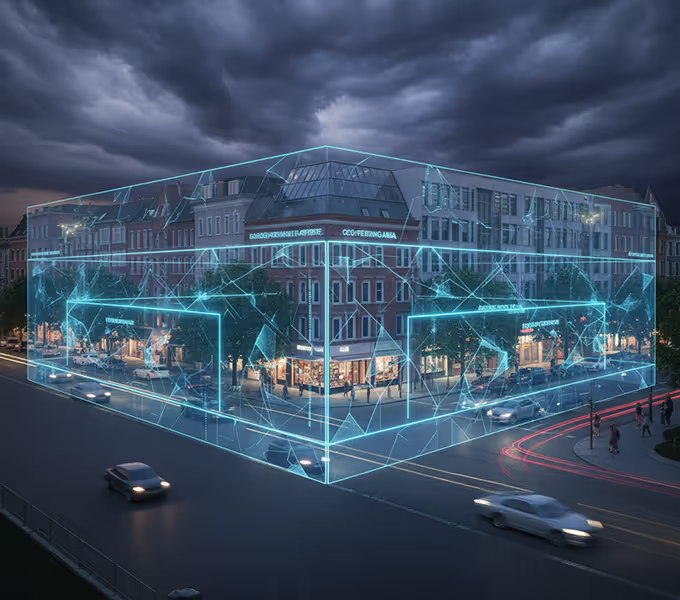
Geofencing also finds applications in the public sector. Cities and municipalities today face growing demands from citizens for transparency and service quality. Using virtual areas, you can easily track whether a salt truck traveled down a street that was supposed to be cleared, or whether a garbage truck actually visited all parts of the municipality.
Zones enable report generation for city management and the public, proving that services were performed. Additionally, you can monitor compliance with restrictions – for example, ensuring vehicles don't enter areas where access is prohibited.
Security
Keeping assets within designated areas
Beyond efficiency, security plays a major role. Theft of construction equipment, delivery vehicles, or agricultural machinery remains an unfortunate reality – read more on this topic here. Geofencing provides a practical alarm system – if machinery moves outside a designated area, the system immediately sends an alert.
This feature is particularly popular when combined with time-based settings. Geofencing can be activated only at night or outside working hours, so administrators receive notifications only when it truly matters.
Geofencing as a practical business tool
Geofencing isn't just a technical curiosity in GPS systems. It's a practical tool across industries that protects assets, saves time, and simplifies administration. Construction companies use it to document machinery work, carriers gain precise delivery data, sales teams have visibility into client visits, and cities can demonstrate service quality.
Virtual fences are no longer just about knowing where your vehicle is located. They're about having complete control over your operations – in real time.

