
Personal Tracking: Safety and Security
What is Personal Tracking?
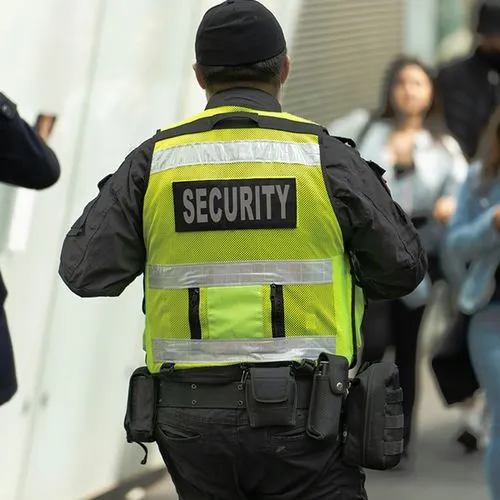
Personal tracking uses GPS technology to monitor the real-time location of individuals, providing enhanced safety and security for vulnerable populations and improved accountability in workplace settings. Unlike vehicle tracking that focuses on assets, personal tracking centers on protecting people – from children and elderly family members to employees working in the field in hazardous or remote environments.
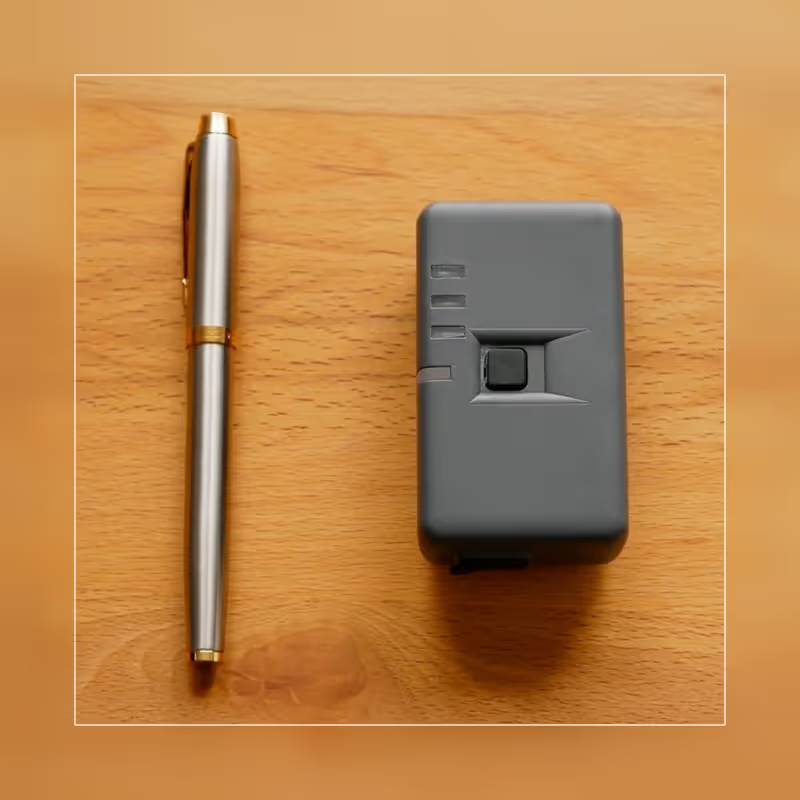
Modern personal GPS tracking devices combine location monitoring with two-way communication and emergency alert capabilities, creating a comprehensive safety solution.
How Does Personal Tracking Work?
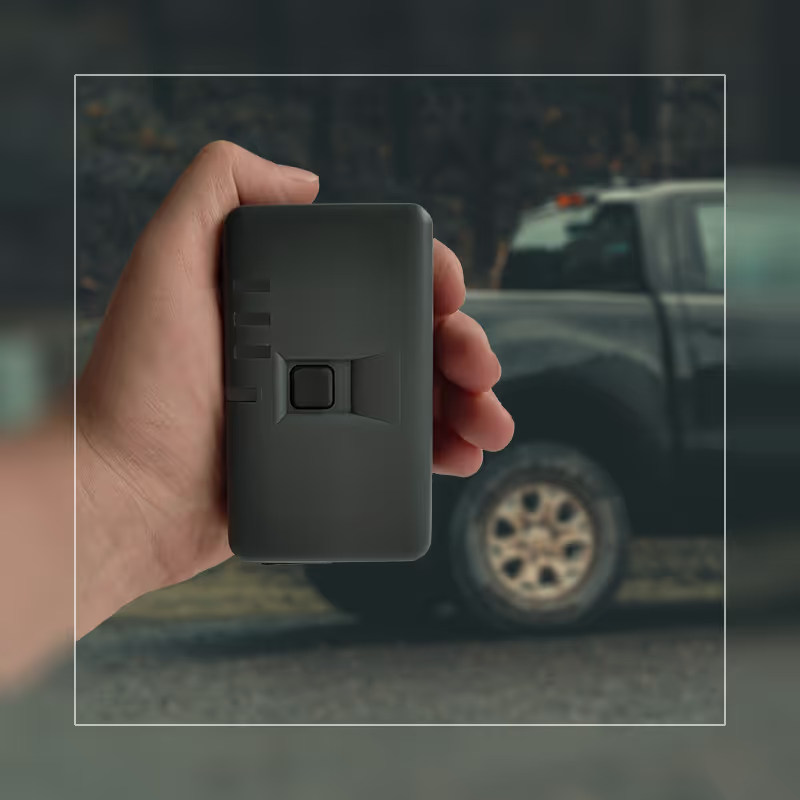
Personal tracking devices use GPS satellites to determine precise location coordinates, which are then transmitted via cellular networks to a secure tracking platform accessible through web browsers or mobile apps.
The technology operates continuously in the background, recording movement history while allowing authorized users to check locations on demand.
Many devices feature built-in emergency buttons that, when pressed, immediately notify designated contacts of both the alert and the person's exact location.
Geofencing capabilities allow users to define virtual boundaries around specific areas. When the tracked person enters or exits these zones, automatic notifications are sent to designated contacts.
Tracking Personnel in the Workplace to Improve Safety and Accountability
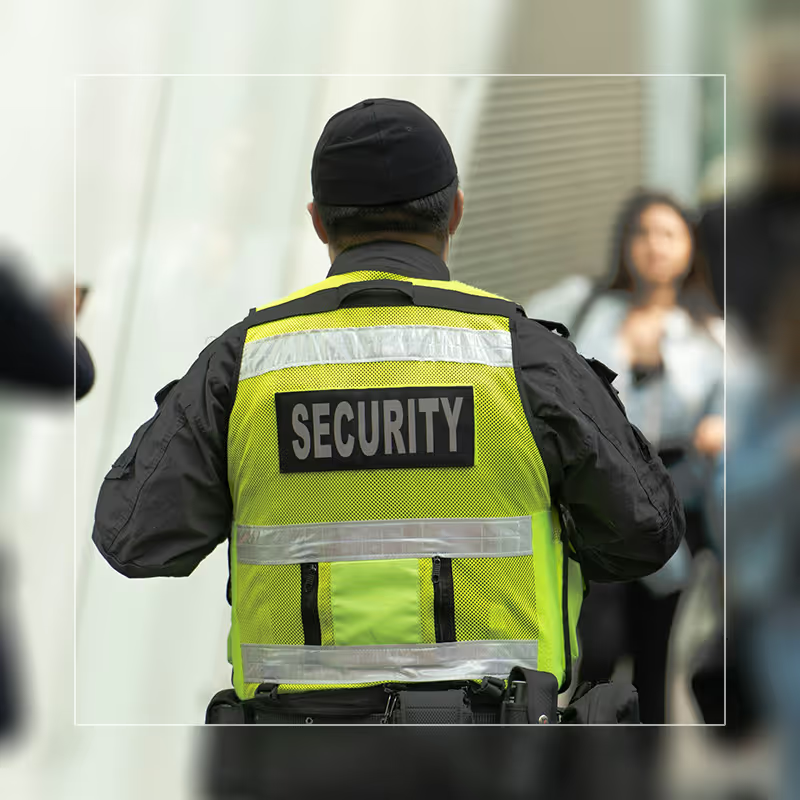
Personal tracking in workplace environments serves dual purposes: enhancing employee safety and improving operational accountability. For businesses with field personnel, lone workers and employees in hazardous or remote environments, real-time location visibility can literally save lives.
Emergency Response and Worker Safety
Employees working alone in remote locations, conducting security patrols, or operating in hazardous environments face elevated safety risks. Personal tracking devices with emergency alert buttons enable workers to summon help immediately when accidents occur, medical emergencies arise, or threatening situations develop. Knowing the exact location of an employee in distress enables rapid emergency response, potentially preventing serious injuries or fatalities.
Accountability and Task Verification
Beyond safety, personal tracking improves workforce accountability and operational efficiency. Businesses can verify that employees are fulfilling assigned tasks according to schedules and visiting required locations. This visibility eliminates disputes about work completion and provides documentation for client billing or compliance requirements.
Personal Tracking in Private Environments to Increase Security
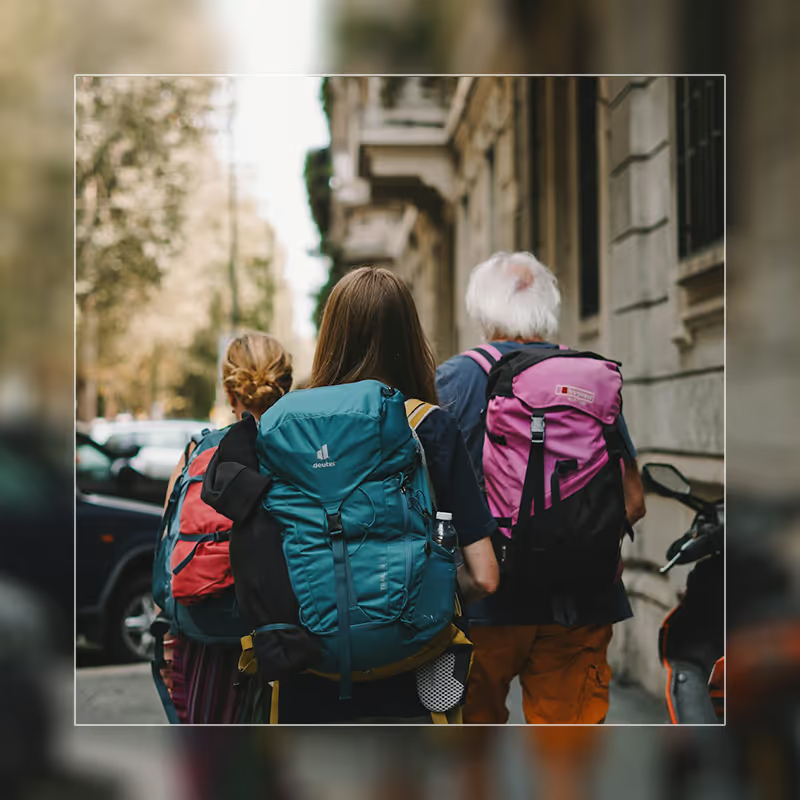
Personal tracking technology provides families with powerful tools to protect their most vulnerable members while respecting appropriate privacy boundaries.
Protecting Children and Teenagers
Parents face constant concerns about their children's safety and whereabouts. Personal tracking devices provide peace of mind by enabling parents to verify their child's location throughout the day. Whether ensuring kids arrived safely at school, confirming they're at a friend's house as claimed, or checking on teenagers driving independently, real-time location visibility reduces parental anxiety.
Teen Driver Monitoring
Teenage driving represents one of the most significant safety concerns for parents.
Auto accidents are the number one cause of death among teens, accounting for more than one-third of all deaths of 16-18 year-olds.
Some insurance providers offer discounts for vehicles equipped with teen tracking devices. Families can contact specialized agents at TeenDriverInsurance.com to learn about available discounts and special coverage options for households with teen drivers.
Caring for Elderly Family Members
Elderly individuals, particularly those experiencing cognitive decline or dementia, face risks of wandering and becoming disoriented. Personal tracking devices enable family members and caregivers to locate loved ones quickly if they wander from home or care facilities.
Geofencing alerts notify caregivers immediately when an elderly person leaves their home, care facility, or other designated safe zone.
The emergency button feature provides elderly individuals with immediate access to help if they fall, experience medical emergencies, or simply feel confused and need assistance.
Privacy and Dignity Considerations
Implementing personal tracking for family members requires balancing safety concerns with respect for privacy and individual dignity. Open communication about the reasons for tracking, who has access to location data, and how the information will be used helps maintain trust and cooperation.
Conclusion
Personal tracking technology has evolved from a luxury to an essential safety tool for families and businesses alike. Whether protecting vulnerable family members, ensuring employee safety in hazardous work environments, or helping teenagers develop safe driving habits, GPS tracking provides real-time visibility that can prevent tragedies and save lives.
The combination of location monitoring, geofencing alerts, emergency buttons, and two-way communication creates a comprehensive safety net that operates continuously without restricting normal activities.

