
Why GPS Tracking Pays Off for Small Businesses
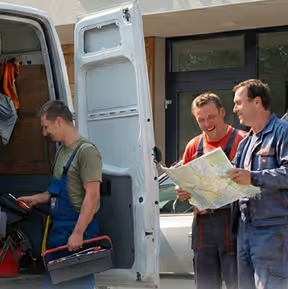
For small businesses, vehicle operations are often taken for granted. Cars simply drive, work gets done, customers get served. Until something goes wrong, there's no reason to change anything. This is precisely why small businesses often overlook small details that individually seem negligible but collectively result in unnecessary costs, wasted time, and stress.
Online GPS vehicle tracking doesn't pay off because it offers one "miraculous" feature. It pays off because it provides oversight of daily operations that otherwise run without control.
Vehicles as Work Tools, Not Just Transportation
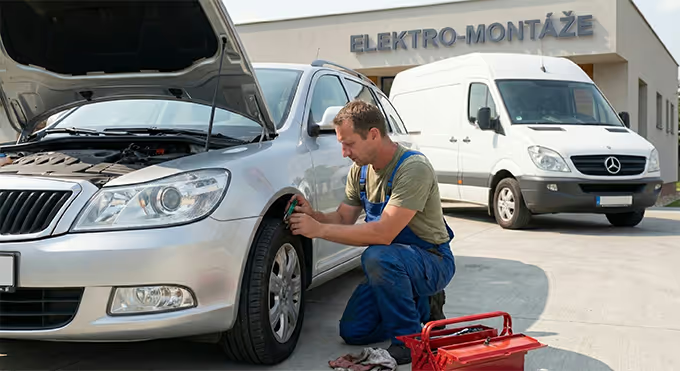
For businesses with one to three vehicles, a car is often a critical work tool. Without it, you can't visit customers, transport materials, or complete jobs. Yet typically no data exists about how these vehicles are actually used.
In practice, businesses don't know exactly when vehicles are in operation, how much time they spend driving versus standing idle, where they repeatedly get delayed, or how evenly they're truly utilized. Online GPS systems collect this information automatically, enabling decisions about vehicle operations based on reality rather than impressions.
Operations Without Phone Calls and Guesswork
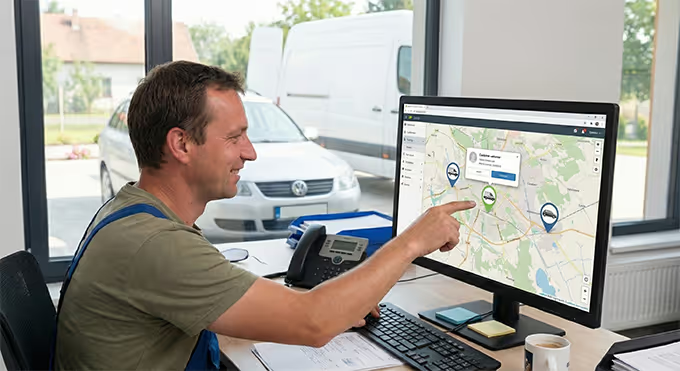
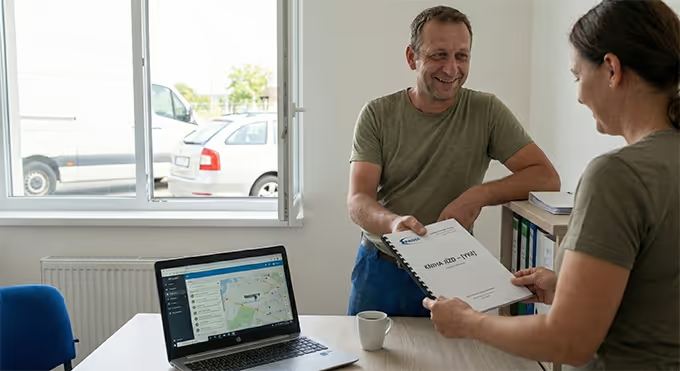
One of the first things small businesses appreciate after implementing GPS is a simple overview of where vehicles are located. The owner or work coordinator sees vehicles on a map and immediately knows whether they're driving, stationary, or already at a customer location.
This has practical impact especially when unexpected jobs arrive, customers ask about arrival times, or plans need quick changes. Instead of phone calls and estimates, concrete information exists that saves time and increases company credibility. (This feature is now extended even into the more remote locations.)
Stops, Waiting, and Dead Time
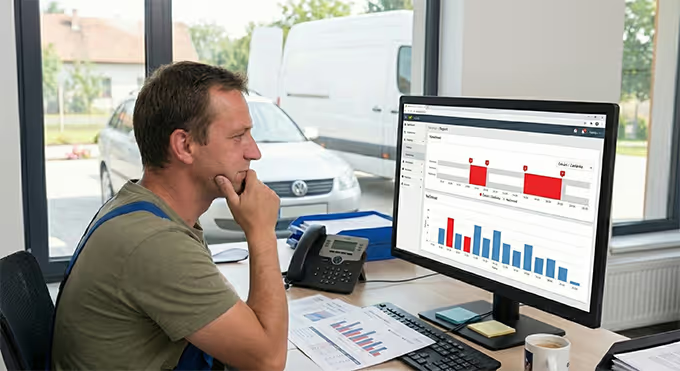
GPS systems don't just track driving but also stops and their duration. Small businesses often discover that a significant portion of the day isn't spent on work or driving but waiting – during loading, unloading, waiting for customers, or sourcing materials.
Waiting itself isn't the problem. The problem arises when these situations repeat, last disproportionately long, and nobody knows about them. Thanks to stop overviews, you can see retrospectively where time is actually being lost and decide whether changes make sense.
Costs That Somehow Keep Growing
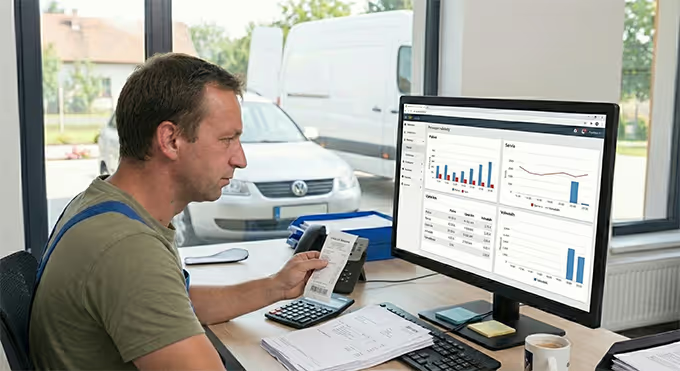
Small businesses rarely conduct detailed analysis of vehicle operating costs. Yet the feeling often emerges that fuel, service, or tires cost more than before. Without data, it's impossible to say why.
Online GPS systems enable tracking of actual mileage, baseline consumption, engine running time, and refueling with its connection to trips. This makes costs stop being invisible, allowing you to address them before they become problems. Additionally there is an option to track fuel usage directly in from the vehicle and send this information straight to the system.
Vehicle and Equipment Security
For small businesses, theft of a vehicle or van with equipment can be an existential problem. GPS tracking functions as a silent security element – alerting you to vehicle movement outside working hours and enabling location tracking in case of theft.
The mere knowledge that a vehicle is being tracked reduces the risk of misuse or unauthorized use. For business owners, this means greater peace of mind and fewer concerns about property.
For extra safety there is an option to enable geofencing. This feature alerts designated person when vehicle enteres or leave predefined area.
Maintenance Without Forgetting and Unnecessary Downtime
Service intervals, technical inspections, or oil changes in small businesses are often addressed only when problems arise. GPS systems monitor mileage and time, providing timely alerts about approaching service or inspections.
This reduces the risk of unplanned vehicle downtime and extends vehicle lifespan. A vehicle that doesn't unexpectedly sit in the shop means less stress and fewer canceled jobs.
People, Fairness, and Team Peace
When multiple people use a vehicle, ambiguities inevitably arise. Who drove it, when, where, and why. Online records don't escalate these situations; rather, they often prevent them from occurring.
The ability to separate business and personal trips and maintain objective records brings peace to small teams. Not because of control, but because of fairness and clear rules.
Logbooks as a Side Benefit, but Important Effect
In this context, automatic logbooks emerge as a natural output from data the system collects for daily operations. They're accurate, defensible, and don't arise as additional administrative burden.
They're important for authorities. For businesses, what's most important is that they don't have to worry about them.

Why This Makes Sense Specifically for Small Businesses
Large companies have dispatchers, processes, and reports. Small businesses have limited time and usually one person handling everything. This is precisely why oversight is more valuable than complex optimizations.
Online GPS tracking gives small businesses oversight without administration, control without micromanagement, and data without complexity. This is exactly the approach used to design MotoMonGPS as a practical tool for daily operations of small businesses where every hour, every vehicle, and every job counts.
Real-World Benefits in Action
Consider a small HVAC repair company with two service vans. Before GPS tracking, the owner spent significant time each day fielding customer calls asking "when will the technician arrive?" and calling technicians to check their locations. After implementing GPS tracking, the owner could see both vans on a map and provide accurate arrival estimates immediately.
The system also revealed that one technician consistently spent 30-45 minutes at a parts supplier that was 20 minutes out of the way, while the other technician used a closer supplier. This single insight, multiplied across dozens of jobs per month, represented hours of wasted time that could be redirected to additional service calls.
The Bottom Line for Small Business Owners
GPS tracking for small businesses isn't about elaborate fleet management strategies or complex data analysis. It's about having basic visibility into how your most important work tools – your vehicles – are actually being used day-to-day.
When you're juggling customer calls, scheduling jobs, managing invoices, and handling the dozens of other tasks that come with running a small business, GPS tracking quietly handles vehicle oversight in the background. You get answers when you need them without adding administrative work to your plate.
For businesses with just a few vehicles, the question isn't whether you can afford GPS tracking – it's whether you can afford not to have the basic visibility it provides. When every vehicle, every hour, and every job matters to your bottom line, knowing rather than guessing makes all the difference.

