
Breath alcohol testing that goes to the job site

Fixed testing stops at the front gate
Most workplace alcohol programs are built around a single point: the entrance. A device sits at the gate, and anyone who never walks through it never gets tested.
Crews on remote sites, drivers who start a shift from a depot two states away, technicians dispatched straight from home to a customer — all of them are effectively outside the program. That is not a policy gap. It is a hardware placement problem.
How mobile breath testing works
SYSDO now pairs with a portable Bluetooth breathalyzer, so the test travels with the supervisor instead of waiting at a door. The device connects to the SYSDO mobile app, the check runs in seconds, and the reading lands in the employee's record with a timestamp.
No paper form, no separate spreadsheet, no transcribing anything later. The record is written at the moment the test happens, by the system that already holds the attendance data.
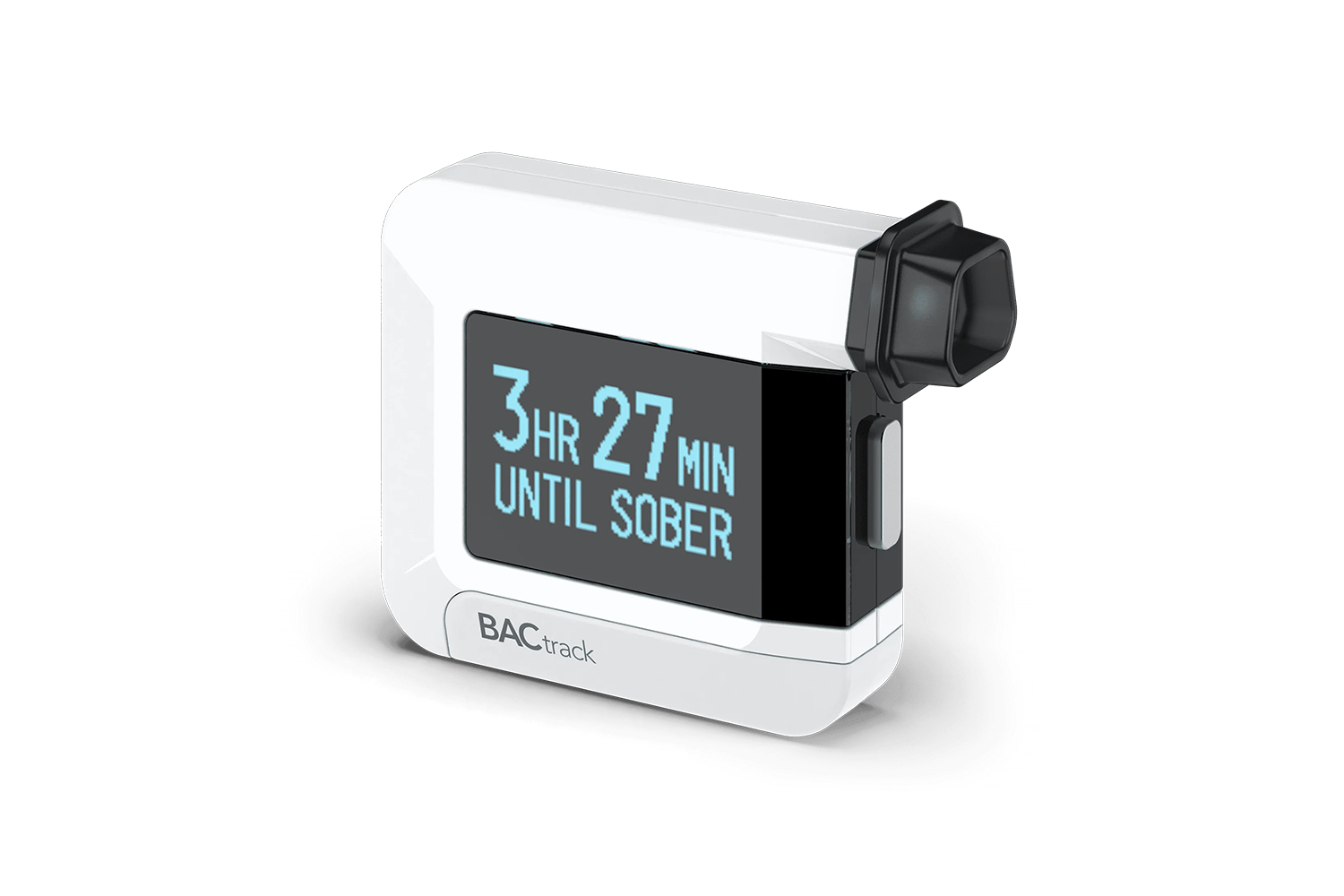
The device pairs over Bluetooth — no cables, no docking station.
A spot check is a conversation. A spot check that writes itself into the employee record is documentation — and documentation is what survives a dispute six months later.
Step by step
Before the test
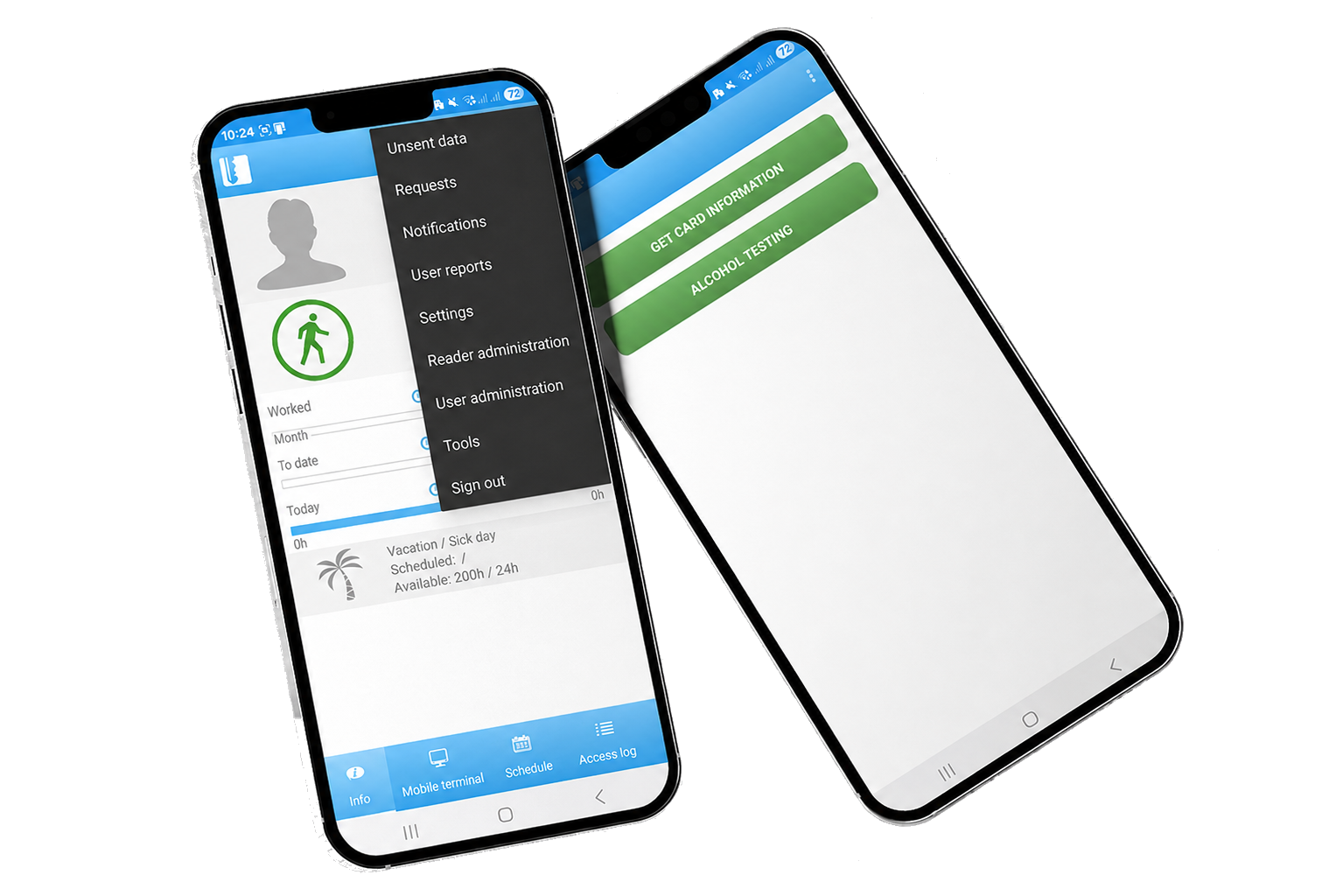
Hold the button on the breathalyzer for seven seconds to switch it into app mode. In the SYSDO app, open Menu → Tools → Alcohol testing. The app scans for the nearest active device and connects over Bluetooth on its own.
During the test
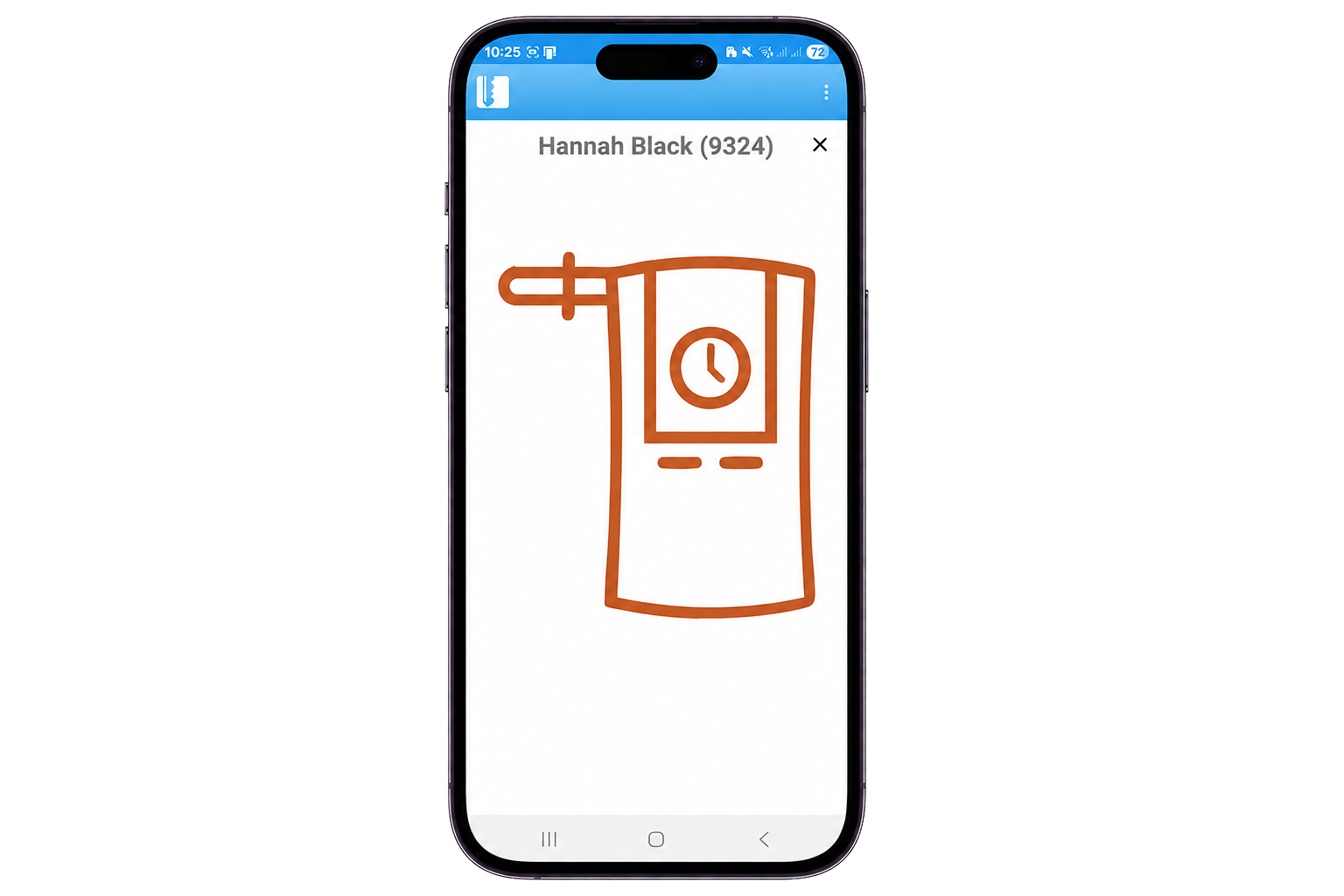
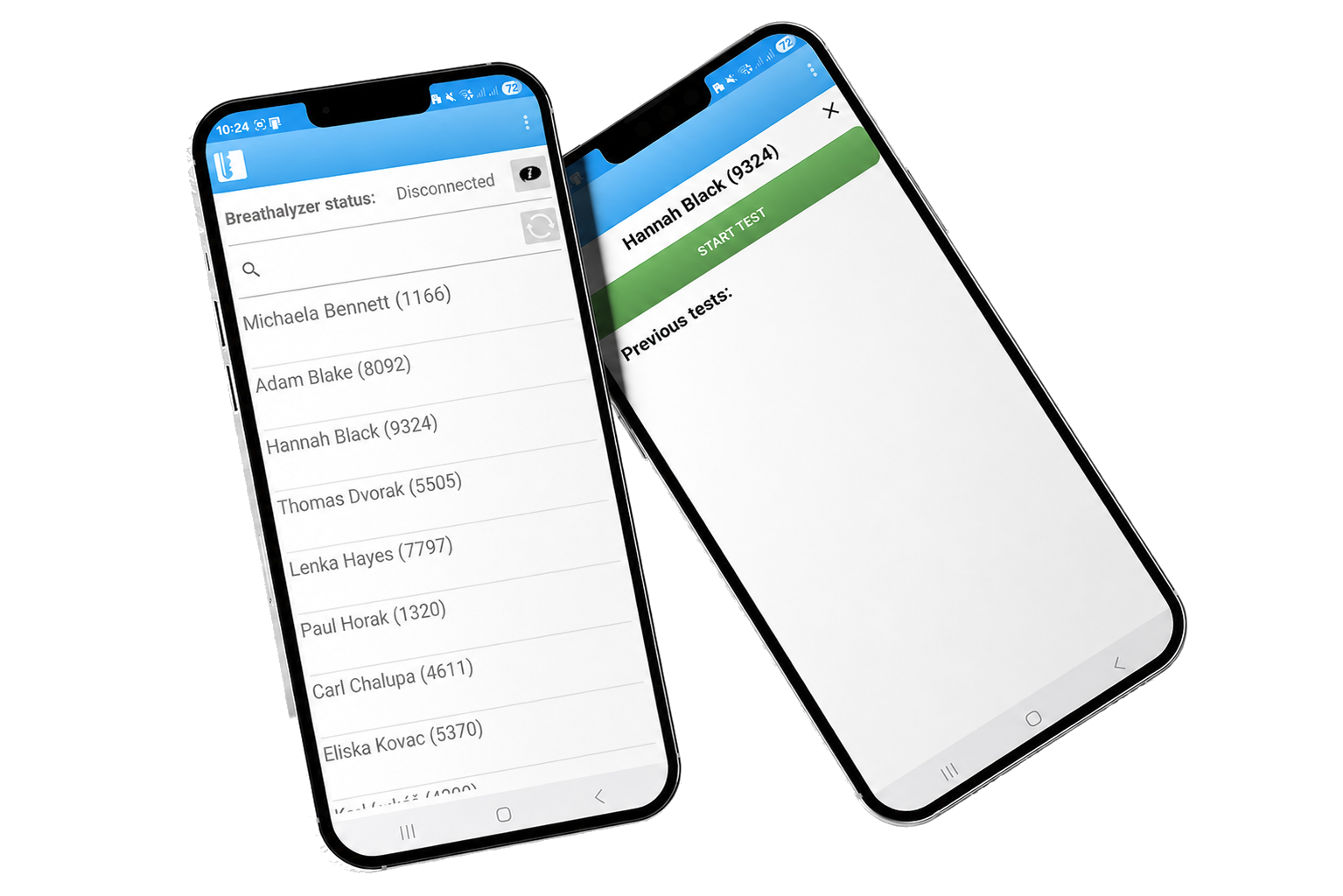
Select the employee from the list. The app walks the supervisor through sensor warm-up and the blow prompt, then confirms when the sample is valid. A few seconds per person, start to finish.
After the test
The reading appears on the phone immediately — green inside the limit, red above it. An over-limit result triggers whatever the account is configured to do, including an email alert to a supervisor.
Every test stays in that employee's history and appears in the SYSDO reports alongside their attendance data. Nothing has to be filed.

Where this actually changes the day
Fleet and delivery drivers
Drivers who start from a yard, a customer site or their own driveway can be checked before the shift begins, not after they have already driven somewhere. Combine it with driver identification and the record shows who took the test and who took the vehicle.
For anyone running fleet management, that closes a real gap — the vehicle log and the person behind the wheel finally describe the same event.
Construction and heavy equipment
Sites move. A fixed terminal does not. Supervisors can run random checks on whoever is on site today, including subcontractors who never pass through a company building.
For crews operating heavy machinery, the check happens where the machine is — which is the only place it means anything.
Field service and remote teams
Technicians dispatched straight to a customer have no gate to walk through. A supervisor with the app and the device runs the check at the vehicle, logs it, and moves on. The employee record updates before the van pulls away.
Keeping the device honest
Calibration is not optional. The unit should be recalibrated roughly every six months or every 300 tests, whichever comes first — and SYSDO flags the device when it is due, so nobody has to track it on a whiteboard.
For a clean reading, wait at least 20 minutes after eating, drinking or smoking. Residual mouth alcohol from a recent drink or even a breath mint inflates the number and hands you an argument instead of a record.
Each device is registered to the account by its IMEI, printed on the packaging and under the battery. Until it is registered, the app will not attribute its readings to anyone.
When the gate is still the right place

Mobile testing does not replace the entrance. It covers what the entrance cannot reach.
SYSDO also integrates with a fixed breathalyzer wired into the attendance terminal and the access control system, so a door or turnstile opens only on a clean reading. The employee identifies by card, fob, fingerprint or face, the system prompts for a breath sample, and access follows the result.
An over-limit reading or a refusal notifies the supervisor immediately. Those readings write into the same employee record as the mobile ones — one history, two ways of collecting it.

