
Smart Vehicle Tracking Without Installation
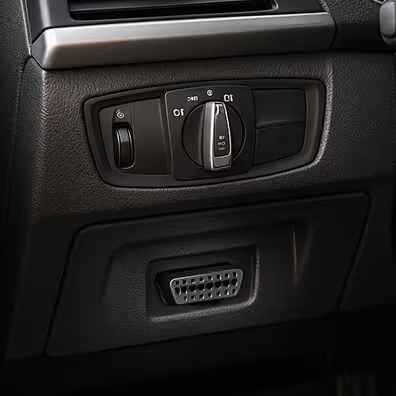
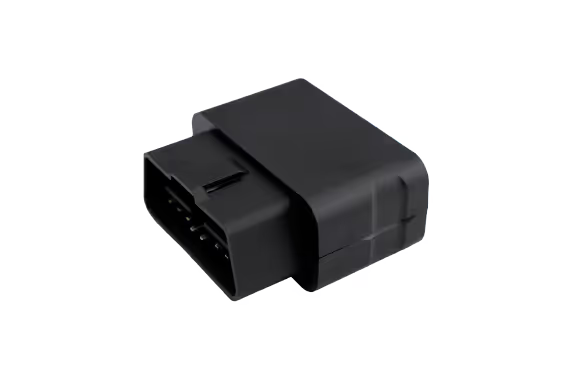
Vehicle tracking is no longer the exclusive domain of large transportation companies. Thanks to modern technology, it has become accessible for smaller businesses and individuals who want oversight of their vehicle movement and usage. Among the fastest and simplest ways to implement a tracking system are OBD units. One of the most advanced in this category is the Queclink GV500CG, a compact LTE tracker designed for direct connection to a vehicle's OBD-II port.
This model combines the simplicity of a plug & play solution with technical capabilities that can handle even demanding telematics projects. In the following article, we'll explore its features, practical applications, and where OBD units provide advantages and where their limitations must be considered.

Simple Deployment into OBD Port
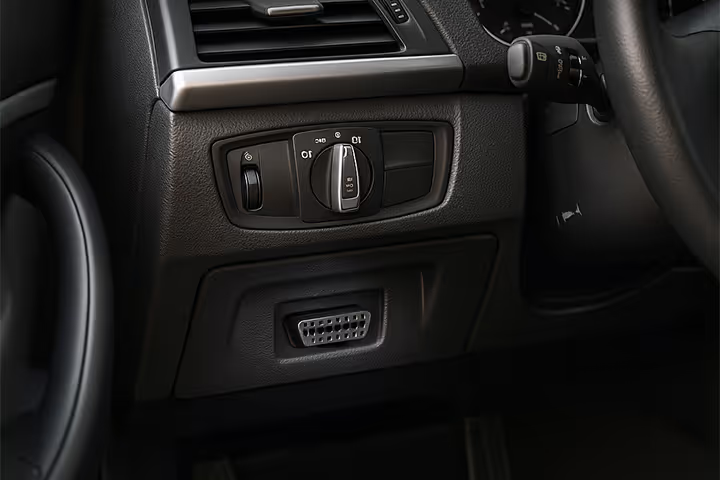
Hardware like the GV500CG simply plugs into the OBD-II diagnostic port found in practically all passenger and light commercial vehicles manufactured after 2001. The unit draws power directly from the vehicle.
A solution that requires no complex installation or intervention in the electrical system.
Inside is a high-sensitivity GNSS receiver that ensures precise location determination, and a mobile module with LTE Cat 1 support. This enables the unit to transmit data in real-time over modern networks while also functioning in areas where only 2G connectivity is available. If temporary signal loss occurs, the device stores records in internal memory and sends them later, ensuring no data is lost.
List of direct benefits
Real-time location tracking with accuracy to within a few meters, providing continuous visibility of vehicle position.
Geofencing capabilities create virtual zones with alerts when vehicles enter or exit designated boundaries, enabling automated monitoring of authorized areas.
Driving style monitoring detects harsh braking, rapid acceleration, impacts, and other risky maneuvers that indicate aggressive or dangerous driving behavior.
Alerts and notifications include towing detection, signal jamming alerts, and low backup battery warnings to protect against theft and tampering.
Data security through TLS 1.2 encryption ensures that all transmitted vehicle and location data remains protected from unauthorized access.
Backup battery provides short-term operation even after disconnection from the vehicle, maintaining tracking capability during theft attempts.
Typical Situations Where OBD Units Excel
Corporate Fleets
Fleet managers appreciate quick installation without vehicle downtime. Units can be easily deployed in dozens of vehicles within a single day. Managers then immediately see movement of all vehicles in the MotoMonGPS system, along with their utilization and individual driver behaviors.
The ability to monitor multiple vehicles simultaneously without scheduling installation appointments or taking vehicles out of service represents significant operational efficiency. When new vehicles join the fleet, simply plug in a unit and tracking begins immediately.
Insurance Companies and Leasing Firms
Insurance companies and leasing firms utilize driving behavior monitoring capabilities. Data about harsh braking or frequent acceleration can be incorporated into premium calculations or risk assessment. For leasing and rental companies, the easy transfer of units from one vehicle to another represents a major advantage.
The objective driving data provided by OBD tracking eliminates disputes about how vehicles were operated and provides documentation for insurance claims or lease agreement enforcement. Usage-based insurance models benefit particularly from the detailed behavior analytics these units provide.
Private Owners
Private owners use the GV500CG primarily as theft protection. Towing alerts, immediate location display, and signal jamming warnings help react quickly and increase the chance of recovering a stolen vehicle.
The knowledge that a vehicle is tracked also serves as a deterrent. Opportunistic thieves often move on to easier targets when they discover tracking devices, making the mere presence of the unit valuable even if theft is never attempted.

Strengths and Limitations of OBD Units
The major attraction of OBD units is ease of use. For businesses, this means rapid deployment and zero installation expenses. Additionally, units can be disconnected anytime and used in different vehicles, increasing flexibility.
No mounting, no wiring, just plug into the port and everything runs.
However, it's important to recognize that the OBD port is relatively accessible in the vehicle interior. If someone knows what to look for, they can disconnect the unit. In some vehicles, port location may also mean the tracker interferes with driver legroom or doesn't connect easily. These aren't critical problems, but factors worth considering during selection.
When OBD Units Are Ideal
OBD tracking solutions work best in situations requiring:
Quick deployment across multiple vehicles without scheduling installation appointments or vehicle downtime.
Flexibility to move tracking between vehicles as fleet composition changes or for temporary monitoring needs.
Cost-effective tracking where professional installation expenses would be prohibitive relative to the monitoring benefits, eg. small businesses.
Short to medium-term tracking projects such as seasonal vehicle monitoring or temporary fleet expansions.
Driver behavior analysis where access to vehicle diagnostic data enhances understanding of how vehicles are operated.
When to Consider Alternatives
Hardwired GPS units may be preferable when:
Maximum theft protection is critical and accessible OBD ports create unacceptable vulnerability.
Long-term permanent installation is planned with no need for unit transfer between vehicles.
Extremely harsh environments require more rugged mounting than OBD port placement provides.
Vehicle diagnostic port access is restricted by design or aftermarket modifications.
Integration with MotoMonGPS Platform
The GV500CG's true value emerges when combined with a comprehensive tracking platform like MotoMonGPS. The hardware collects detailed vehicle data, but the platform transforms this raw information into actionable business intelligence.
Fleet managers access intuitive dashboards showing real-time vehicle locations, historical routes, and performance metrics. Automated reports eliminate manual data compilation, while customizable alerts ensure relevant notifications without information overload.
The platform's geofencing tools enable creation of customer sites, restricted areas, and operational zones. When vehicles enter or exit these boundaries, automatic logging occurs without driver intervention, simplifying job verification and billing documentation.
Driving behavior analysis identifies training opportunities by highlighting individual drivers who frequently exhibit harsh braking, rapid acceleration, or other risky maneuvers. This data-driven approach to driver coaching produces measurable safety improvements and fuel efficiency gains.

Real-World Implementation Example
Consider a property management company with 12 service vehicles used by maintenance technicians. Before implementing GV500CG tracking, the company struggled with inaccurate timesheet reporting, customer complaints about arrival times, and concerns about unauthorized vehicle use after hours.
Installation took less than two hours for all vehicles – each technician simply plugged the unit into their assigned vehicle's OBD port during a morning meeting. By afternoon, the fleet manager had complete visibility into vehicle locations and could provide accurate arrival estimates to customers.
Within the first month, the system revealed that three technicians consistently drove home in company vehicles after their shifts ended, racking up unnecessary mileage and fuel costs. Another technician's frequent harsh braking indicated a need for defensive driving training. Two vehicles showed consistent idling at a coffee shop mid-morning, identifying time-wasting behavior.
Addressing these issues resulted in a 15% reduction in fuel costs, elimination of after-hours vehicle use, and improved customer satisfaction through accurate service window communication. The system paid for itself within three months through fuel savings alone.
Conclusion
Numerous OBD units exist on the market, but the GV500CG ranks among the most modern and reliable. It combines the advantages of easy connection with features typically expected from more expensive hardwired GPS units. Combined with the MotoMonGPS platform, users receive not just vehicle location oversight but a comprehensive tool for trip analysis, driver behavior monitoring, and security surveillance.
If you're looking for a device that installs in seconds, functions with modern mobile networks, and offers professional-level services, the Queclink GV500CG represents an ideal choice. The plug-and-play simplicity doesn't compromise on capability, making sophisticated vehicle tracking accessible to businesses of any size.
For organizations hesitant about the commitment and expense of traditional GPS tracking systems, OBD units like the GV500CG provide a perfect entry point. Experience the benefits of fleet visibility without installation costs or vehicle downtime, then decide if expanded tracking capabilities make sense for your operations.

